Mission Blue and her partners have been advocating for the protection of the Ross Sea Hope Spot for years. And now that Russia has finally jumped on board, what was once just hope is now a reality: plans are set for the creation of a huge new marine protected area in the region! Located deep in the Southern Ocean, the Ross Sea is one of the most pristine marine ecosystems on the planet offering scientists the chance to study marine processes yet to be affected by human interference, pollution or exploitation. Due it its remarkable biodiversity, the Ross Sea is full of unique wildlife like penguins and blue whales, including numerous species found nowhere else in the world. HUGE thanks go to the Antarctic Ocean Alliance, Ocean Unite, The PEW Charitable Trusts, Greenpeace, Lifeline Antarctica and the many other passionate and persistent voices for the Ross Sea — including YOURS!
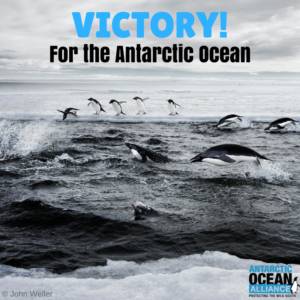
Antarctic Ocean Alliance Press Release
Friday 28 October, Hobart, Australia: The Antarctic Ocean Alliance applauds the momentous agreement by Members of the Commission for the Conservation of Antarctic Marine Living Resources (CCAMLR) to safeguard 1.55 million km2 of the Ross Sea in the Southern Ocean.
“CCAMLR made history today by declaring the world’s largest marine protected area in the Ross Sea, protecting penguins, seals, whales and countless other creatures,” said Andrea Kavanagh, who directs The Pew Charitable Trusts Antarctic and Southern O cean work. “This decision shows that CCAMLR takes its role as protector of Antarctic waters seriously.”
Mike Walker, Project Director of the Antarctic Ocean Alliance, said the deal was an important milestone for ocean conservation, but urged countries to go further.
“For the first time, countries have put aside their differences to protect a large area of the Southern Ocean and international waters,” Walker said. “The limited 35-y ear restriction for protection of the Ross Sea contradicts the scientific advice that marine protection should be long-term. Nevertheless, we are confident that the significant benefits of protecting the Southern Ocean will soon be clear and the international community will act to safeguard this special place long into the future.”
The Ross Sea is one of the last intact marine ecosystems in the world, home to penguins, Weddell seals, Antarctic toothfish, and a unique type of killer whale. The region is critical for scientific research, for studying how marine ecosystems function and understanding the impacts of climate change on the ocean. Millions of people around the world have joined the global call for large-scale marine protection in Antarctica.
“This is a victory for the whales, toothfish, and penguins that live in the Ross Sea, as well as for the millions of people who supported this effort,” said John Hocevar, a marine biologist with Greenpeace. “We urge the international community to take notice and designate additional, permanent protections in other areas of the Antarctic Ocean and around the world.”
“This would not have been possible without Russia joining with other countries to achieve today’s historic decision to protect the Ross Sea. The governments of the United States and New Zealand should also be commended for their tireless work these past six years,” added Kavanagh.